Showing posts with label Poetry. Show all posts

Saturday, 4 February 2023

New Hope

 
After a mild period where lots of brave little souls have pushed their first cautious heralds above ground we have now been promised another cold spell with night frosts. Ah well, we may all be looking forward to Spring here in the northern hemisphere but February and March are often the coldest months of the year around here. Still, aren't they pretty, my aconites and snowdrops?
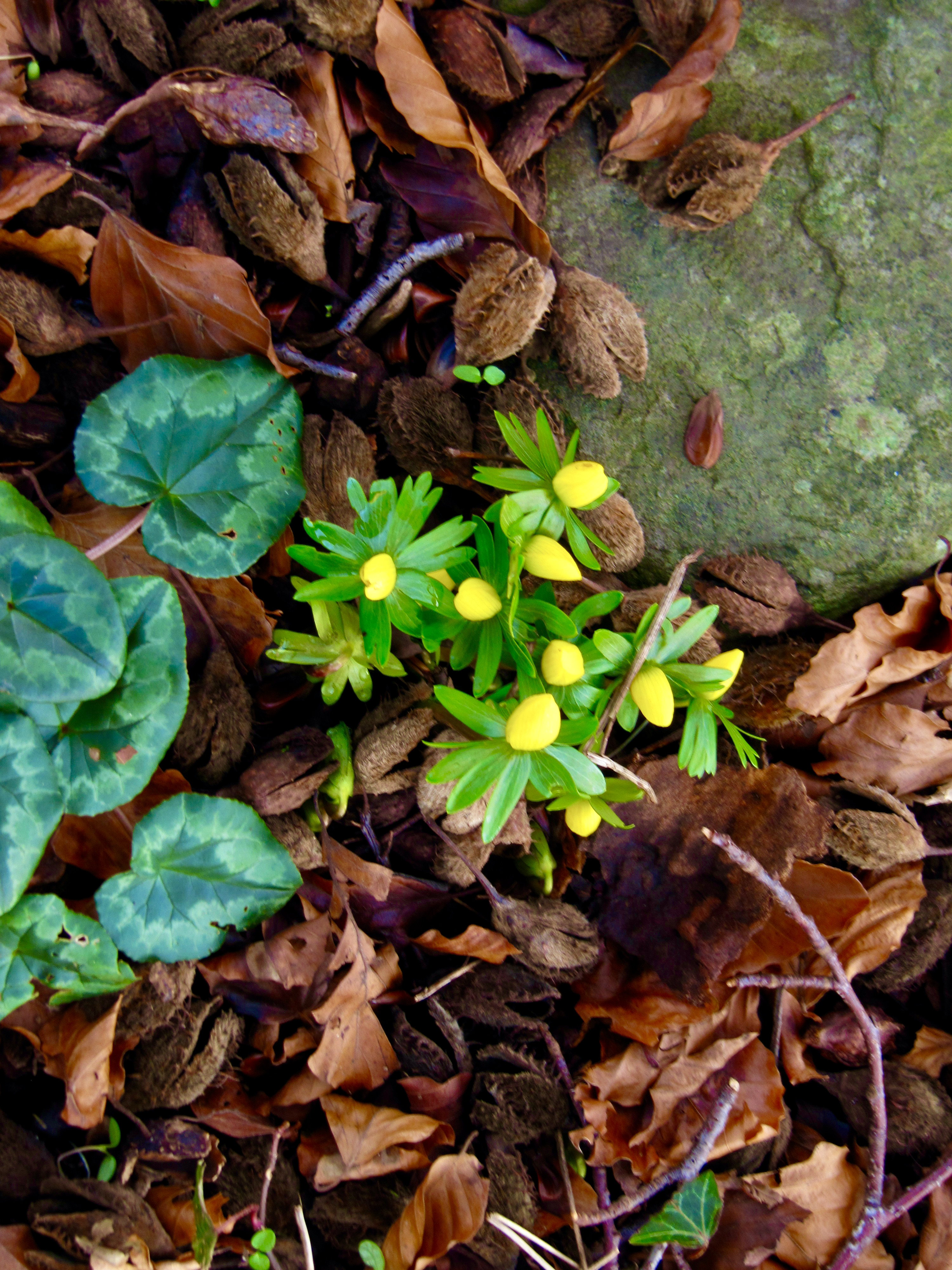
The pure gold of aconites

Snowdrops to gladden the heart


I saw the GP about my night terrors. There is nothing much she can do, there are no easy medications which would see them off.  The subconscious will throw up all sorts of detritus from a long life which has most certainly had its shadows and dark sides, and still has. What she suggested I do is to see a counsellor if the terrors don't end. In the meantime, I am to calm my mind as much as possible before bed and try to discard anything, people, activities, thoughts, that endanger my equilibrium. 

She is quite right, of course, now, at the end of my years, I really do not need to accommodate the toxicity of unwanted intrusion by whatever, whomever, whenever. That includes people like Freda. I slowly came to understand over the last few weeks that people like Freda are bad for me and that I am under no obligation to put up with them.

I went to a very interesting lecture and slide show on compost the other night. Yes, you read that right, a lecture on compost! Those who have read my burblings for some years may remember that I love compost and am quite a whizz at producing quantities of the stuff which then, with the help of the handsome hulk, get spread inches deep on my flower beds, there to await worms and other crawlies to pull the brown and crumbly treasure into the soil beneath. 

However, this is not really what I wanted to say. The lecturer was a German who had been a physician in civilian life (pre garden lecturing) and owns an ancient farmhouse with land attached to it, which he has turned, over 35 years, into a splendid show garden and woodland. During a break I asked what he thought of the UK, the dreaded Brexit and the political turmoil of the last few years and was he ever tempted to return to Germany. He smiled very nicely and calmly explained that he lives on his land, tends his garden, enjoys his labours and pays little attention to the machinations of the great and not-so-good. He said : "I have my settled status, I have my garden, my hobbies and some good friends". 

In other words, he lives in a comfortable bubble and cares little for the ills the great and not-so-good visit upon us. I too have my settled status (it means we can stay in the UK after Brexit), my garden, my books, a few good friends, what more is there?  

And yet, I find it hard to turn my back on the world and ignore the state of it. Perhaps I must turn my attention more often back to my great love, poetry. Poetry to soothe the troubled spirit and calm the unhappy mind.

This short poem by the Welsh poet Edward Thomas conveys a message of optimism about the approach of Spring:


Over the land freckled with snow half-thawed
The speculating rooks at their nests cawed
And saw from elm-tops, delicate as flower of grass,
What we below could not see, Winter pass.


Thursday, 10 March 2022

Today I heard the tree speak

and this is what it said:


Got a date with spring
got to look me best.
of all the trees
I'll be the smartest dressed.

Perfumed breeze
 behind me ear.
pollen accessories
all in place.


Raindrop moisturizer
for me face.
sunlight tints
to spruce up the hair.

What's the good of being a tree
if you can't flaunt your beauty?


Winter, I was naked
exposed as can be.
Me wardrobe took off with the wind.


Life was a frosty slumber.
Now, spring, here I come.
Can't wait to slip in
to me little green number.


poem by
John Agard
from a 'Poem for every Night of the Year.


Sunday, 14 February 2021

Thoughts on Valentine’s Day

Fat raindrops race down the window pane,  avoiding the shiny, pearly patches of earlier gusts of rain sticking to the unwashed glass, and end in splatters on the lower frame. A busy wind ruffles and drives last autumn’s remaining shrunk and shrivelled leaves across the moss infested grass, to land at the foot of hedges. Blackbirds fight each other for any crumbs left from the handfuls flung out by my generosity; angrily they chase each other and bicker with sharp cries. Mine, all mine, they seem to warn. Were they kin last year? They look adult now, the aggressive males with bright yellow beaks and the females with their brownish speckled breasts, a little in awe of the males. The females might retreat while the male struts his belligerent stuff, but she soon comes back and sneaks food when his back is turned.


Neither Blackbirds nor the weather take the slightest notice of Valentine’s Day. No chocolates, hearts and flowers for me either. Except that I have already set aside a bottle of Rioja, a bit of steak and some liqueur-filled cherry chocolates for later. It’s too wet and cold to bother picking flowering stems in the garden, so no harbingers of spring indoors.

Many of you will know that Valentine’s Day is another of the Christian festivals that took the place of ancient pagan celebrations, for safety’s sake, of course, just in case Christians would be tempted to follow the ancient rituals of naked rampaging and the beating of women for the purpose of ensuring fertility. Plutarch’s description of Lupercalia leaves no doubt:


 "...many of the noble youths and of the magistrates run up and down through the city naked, for sport and laughter striking those they meet with shaggy thongs. And many women of rank also purposely get in their way, and like children at school present their hands to be struck, believing that the pregnant will thus be helped in delivery, and the barren to pregnancy.”

Hardy folk those ancient Romans. Surely even in Rome the middle of February is cold enough for any man running around naked to be in danger of having his bits frozen off? 


A tad different from Hallmark’s contribution to the happiness of modern days females, who are content with a cheesy card promising eternal love and a few chocolates in a giant heart shaped box.

This must be my all-time favourite poem for Valentine’s Day;

‘Valentine’ by Carol Ann Duffy

Not a red rose or a satin heart.

I give you an onion.
It is a moon wrapped in brown paper.
It promises light
like the careful undressing of love.

Here.
It will blind you with tears
like a lover.
It will make your reflection
a wobbling photo of grief.

I am trying to be truthful.

Not a cute card or a kissogram.

I give you an onion.
Its fierce kiss will stay on your lips,
possessive and faithful
as we are,
for as long as we are.

Take it.
Its platinum loops shrink to a wedding-ring,
if you like.

Lethal.
Its scent will cling to your fingers,
cling to your knife.


Tuesday, 16 April 2019

The Pursuit of Happiness

Lately I haven been thinking about happiness. Not only asking what it is but is there anyone who is likely to have more than a few months of positive happiness during a lifetime? Let’s assume that most of you are familiar with the full quote in the-declaration-of-independence, that is not what I am concerned with here. For the first time this year I heard of the annual International Day of Happiness on March 20th; this year’s theme is Happier Together, focusing on what we have in common, rather than what divides us. So this is what set me thinking of the rather strange phrase The Pursuit of Happiness, which first of all, brought me to the lines in Philip Larkin’s poem for Sally Amis, 'Born Yesterday'

In fact, may you be dull —
If that is what a skilled,
Vigilant, flexible,
Unemphasised, enthralled
Catching of happiness is called.

Nothing Earth shattering, gut busting, deliriously heart palpitating here, nothing pursued at full tilt, nothing desperately grabbed and held and jealously guarded here.

How can you pursue happiness? Isn’t it rather something that falls to your lot unexpectedly, that catches you unawares; if I were to set out to be truly happy deliberately, I wouldn’t have the first idea how to go about it. I am more likely to follow Emily Dickinson's’ Little Stone, of which she asks:

How happy is the little Stone
That rambles in the Road alone,
And doesn’t care about Careers
And Exigencies never fears —
Whose Coat of elemental Brown
A passing Universe put on,
And independent as the Sun
Associates or glows alone,
Fulfilling absolute Decree
In casual simplicity —

Independence, without a care in the world, not seriously striving but rambling happily, are what set the little stone - and therefore us - on the path to happiness.

Even simpler - and more fun is AA Milne’s John who

          had
Great Big
Waterproof
Boots on;
John had a
Great Big
Waterproof
Hat;
John had a
Great Big
Waterproof
Mackintosh --
And that
(Said John)
Is
That.

Yes, John and that great big puddle is waiting for you and what greater happiness can there be than jumping right in with both feet?

But Judith Viorst, the American writer, newspaper journalist, and psychoanalysis researcher - someone I had not come across before I ruminated about happiness - and what a happy find she turned out to be - sums it up for me perfectly:

Happiness (Reconsidered)

Is a clean bill of health from the doctor,
And the kids shouldn't move back home for
more than a year,
And not being audited, overdrawn, in Wilkes-Barre,
in a lawsuit or in traction.

Happiness
Is falling asleep without Valium,
And having two breasts to put in my brassiere,
And not (yet) needing to get my blood pressure lowered,
my eyelids raised or a second opinion.

And on Saturday nights
When my husband and I have rented
Something with Fred Astaire for the VCR,
And we're sitting around in our robes discussing,
The state of the world, back exercises, our Keoghs,
And whether to fix the transmission or buy a new car,
And we're eating a pint of rum-raisin ice cream
on the grounds that
Tomorrow we're starting a diet of fish, fruit and grain,
And my dad's in Miami dating a very nice widow,
And no one we love is in serious trouble or pain,
And our bringing-up-baby days are far behind us,
But our senior-citizen days have not begun,
It's not what I called happiness
When I was twenty-one,
But it's turning out to be
What happiness is.

None of the poets and writers here has mentioned the one cause of happiness that started me off on my small quest: other people. I may leave that for the next post.


Wednesday, 28 November 2018

The Valuable Time of Maturity

I counted my years and discovered that I have
less time to live going forward than I have lived until now.

I have more past than future.
I feel like the boy who received a bowl of candies.
The first ones, he ate ungracious,
but when he realized there were only a few left,
he began to taste them deeply.

I do not have time to deal with mediocrity.
I do not want to be in meetings where parade inflamed egos.

I am bothered by the envious, who seek to discredit
the most able, to usurp their places,
coveting their seats, talent, achievements and luck.

I do not have time for endless conversations,
useless to discuss about the lives of others
who are not part of mine.

I do not have time to manage sensitivities of people
who despite their chronological age, are immature.

I cannot stand the result that generates
from those struggling for power.

People do not discuss content, only the labels.
My time has become scarce to discuss labels,
I want the essence, my soul is in a hurry
Not many candies in the bowl…

I want to live close to human people,
very human, who laugh of their own stumbles,
and away from those turned smug and overconfident
with their triumphs,
away from those filled with self-importance,
Who does not run away from their responsibilities ..
Who defends human dignity.
And who only want to walk on the side of truth
and honesty.
The essential is what makes
life worthwhile.

I want to surround myself with people,
who know how to touch the hearts of people ….
People to whom the hard knocks of life,
taught them to grow with softness in their soul.

Yes …. I am in a hurry … to live with intensity,
that only maturity can bring.
I intend not to waste any part of the goodies
I have left …
I'm sure they will be more exquisite,
than most of which so far I've eaten.

My goal is to arrive to the end satisfied and in peace
with my loved ones and my conscience.
I hope that your goal is the same,
because either way you will get there too .. “


Mario de Andrade
Brazilian poet, novelist, musicologist, art historian and critic, lived1893-1945


Although I would like to be firmly convinced, that all the wants, intentions, resentments, deliberations, judgments and realisations go for me too, I ask myself, where do we find the paragons of virtue we yearn to pass our time with towards the end of our life.. Shouldn’t we start with ourselves? It’s all very well to set up no-go-zones for others, exclude people who don’t come up to our exacting standards and consider others boring, mediocre, either overconfident or faintly dishonest. Of course, it would be nice if we could measure ourselves by these wonderful maxims, personally, I can’t quite see it happen. We could strive for perfection, reaching it is another matter. I only know that I have a very long way to go.

Someone brought this poem to my German Conversation group for distribution. At first I thought it worth sharing, then I felt slightly uncomfortable. It makes me feel that the poet has a very high opinion of himself which puts him firmly in the category of self-importance. Still, it is perfectly true that age brings indifference to how others see us and a certain urgency takes over where patience with the foibles of others once resided.

What do you think, am I too harsh?

Monday, 28 November 2016

Nemesis Day

How utterly exhausting it is to get tangled up in politics for weeks on end; it’s draining, physically and mentally. True, we need to get angry when we, our lives and our Earth are threatened; we should act on that anger if there is the smallest chance that our action matters, but for far too many of us there is little we can do to change things in the short term; we might as well continue with our day to day life and make what we can of it. Dreary, dark November is a joyless month anyway, looking for added misery only exacerbates the gloom.

I would love to believe in the truth of this quote by Lord (George Gordon) Byron 1788-1824, that most notorious and flamboyant Anglo-Scottish poet. :

“Time and Nemesis will do that which I would not, were it in my power remote or immediate. You will smile at this piece of prophecy - do so, but recollect it: it is justified by all human experience. No one was ever even the involuntary cause of great evils to others, without a requital: I have paid and am paying for mine - so will you.”

Were he living now he might vulgarly call it Payback Time.

In ancient Greek religion, Nemesis was the goddess who enacted retribution against those who succumb to hubris (arrogance before the gods). Another name was Adrasteia, meaning "the inescapable”. The Romans knew her as Invidia.
Alfred Rethel “Nemesis"

The ancient Greeks knew a thing or two about retribution, in the shape of the Goddess Nemesis it was a recurrent theme of many Greek tragedies. Nemesis was to be feared and a sure and inevitable reward for arrogance and conceit, self-importance and egotism.

I came across Nemesis in a very much more modern setting, in one of the short stories by Saki (HH Munro). Clovis complains that there are remembrance days throughout the year which persistently harp on one aspect of human nature and entirely ignore the other: we have Christmas and New Year, Easter, Birthdays and Anniversaries, when we are encouraged by convention to send gushing messages to all and sundry; to pretend optimistic goodwill and servile affection to people whom we can scarcely abide in reality.

Clovis continues:” There is no outlet for demonstrating your feelings towards people whom you simply loathe.”

Does he perhaps have a point?

Would a recognised Nemesis Day be such a terrible idea? Would we all wait for it impatiently and look forward to taking much pleasure in the settling of old scores and grudges being “gracefully vindictive to a carefully treasured list of people who must not be let off” ?

Or do we turn the other cheek by responding to injury without taking revenge?

Questions questions, problems, problems. I am not one for turning the other cheek, but neither am I a great one for openly seeking revenge, openly being the operative word. Besides, nurturing grudges is such a waste of precious time. I only learned that lesson in the second half of my life and have thereby saved myself a lot of heartache.

There may be a third way of coping with a world we find hard to understand and that is to take to heart the words of Wendell Berry, a poet whom I love and admire more and more:

When despair grows in me
and I wake in the night at the least sound
in fear of what my life and my children's lives may be,
I go and lie down where the wood drake
rests in his beauty on the water, and the great heron feeds.
I come into the peace of wild things
who do not tax their lives with forethought
of grief. I come into the presence of still water.
And I feel above me the day-blind stars
waiting for their light. For a time
I rest in the grace of the world, and am free.


Friday, 19 August 2016

The Remorseful Day


When I heard young Morse (in a repeat of Endeavour)  recite the last two stanzas of A.E. Houseman’s  “How Clear, How Lovely Bright"  I realised that my attitude has lately changed to a calmer, lighter mood. Not that there have been any great differences in our circumstances, it’s simply that I am perhaps coming to terms with what cannot be altered. At least, I hope so. What lies beyond our control must be endured. Sitting, like Mimir the Dwarf in the hole at the foot of the dead sycamore tree, plotting, worrying and endlessly turning the same problem over in my mind won’t bring relief.

I’ve also found my material feet, which helps. All the legal formalities have been dealt with - and paid for. ouch! - . I have a brand-new, fat file full of solicitors’ letters, legal documents and official declarations. Neither one of us likes it but, there you are. It was necessary.

Most of the long neglected jobs around house and garden have been tackled; I have assumed responsibility for them and, being a rather methodical and tidy person, they have been initiated, if not completed. Beloved is more the type who puts jobs on lists, where they are allowed to grow whiskers. In his opinion, collecting items on a list means that the job is half done. Not so, as far as I’m concerned. Now there’s only the large-ish stain on the sitting room ceiling to be dealt with; the bath in the room above overflowed and the stain is most unsightly. I dread the thought of emptying the sitting room of furniture; let’s see, perhaps I can organise a couple of hefty chaps to do it. Painters are notoriously slow in coming, so maybe I shall have to live with the stain for a while yet.

Another thing which has helped enormously is that I have taken to gardening again. I know I’ve rather been going on about gardening recently, but the mouth speaks what the heart is full of. The same applies to keyboard and fingers, in this instance.  The place already shows signs of improvement, which spurs me on to get out there and labour.

There’s one other thing which has gone by the board, i.e. unresolved issues with people, family and acquaintances both. Up to a few months ago these issues would pop into my mind at the most unsuitable moments, I’d fret and worry at them and allow them to depress me. No more. When you are faced with a situation which goes right to the heart of existence itself, anything else becomes mere ballast, an irritation to be shed until such time as you actually have the strength - and time - to bring it up again from the depths. I am, of course, hoping that these issues will  have disappeared into outer space by then anyway. Never to resurface. Going back to the first paragraph: it’s best not to burden yourself with things you cannot change.

So, dear old A.E. Housman, who wrote the haunting poem "A Shropshire Lad" and whose ashes are buried just outside St. Lawrence’s Church in my county town of Ludlow, sent me a timely reminder on how to avoid The Remorseful Day. I cannot promise that every day I shall see the bright new morning, or that I shall be strong every day granted us, me and Beloved, but I shall endeavour.

How clear, how lovely bright
How beautiful to sight
    Those beams of morning play;
How heaven laughs out with glee
Where, like a bird set free,
Up from the eastern sea
    Soars the delightful day.

To-day I shall be strong,
No more shall yield to wrong,
    Shall squander life no more;
Days lost, I know not how,
I shall retrieve them now;
Now I shall keep the vow
    I never kept before.

Ensanguining the skies
How heavily it dies
    Into the west away;
Past touch and sight and sound
Not further to be found,
How hopeless under ground
    Falls the remorseful day.


Sunday, 6 December 2015

Blow, blow, thou Winter Wind

Winter floweringViburnum

Now stir the fire, and close the shutters fast,
Let fall the curtains, wheel the sofa round.
And, while the bubbling and loud-hissing urn
Throws up a steamy column, and the cups,
That cheer but not inebriate, wait on each,
So let us welcome peaceful evening in.....   *

Blow, blow, thou winter wind....  **
Indeed the wind blew fiercely and relentlessly for most of the week, and Beloved and I, looking out upon a scene of battle from behind the sheltering window glass, congratulated ourselves on the timely removal of the horse chestnut tree. The stiff and naked limbs of our one remaining giant, a stately, ancient beech tree, swayed heavily in the gusts coming up the valley from the West. So far, the river Clun has risen merely to within an inch of the top of its banks, any more rainfall will see the castle meadow flooded and Millie will have to paddle for her afternoon constitutional.

Inside, it’s been a very quiet week. Fearful of being blown off the road into hedges and ditches I left the car in the garage and made do with the village grocery shop for items like fresh milk and bread. Even that was a struggle, catching a lull in the rainstorms. There will be plenty more such weather, the forecasters say, to do with global warming and man-made climate change. If that is so then I will not be able to keep many appointments during winter, which take me away from the village. As it is, an afternoon meeting of German conversationalists was cancelled because nobody fancied getting trapped on flooded roads. I did, however, have a very pleasant hour long telephone conversation, in German, with a fellow blogger, another German lady living in the UK.We have only just started this contact and are still in the early stages of exchanging life stories.

So, for most days we did what the poet said: we put our feet up, drank tea, wrapped ourselves in cosyness and welcomed peaceful evening in. We had a short, two-hour power cut one night;  there was enough light from the sky for me to go outside through the nearest door, grope my way around the terrace at the back of the house and through another door into the scullery where the torches live. Armed with a torch it was easy to find candles and matches. I was almost disappointed when the lights came back on. We so rarely sit side by side, exchanging quiet thoughts and comfortable silences.


* from  The Task by W. Cowper
** from As You Like It by Shakespeare


Tuesday, 24 November 2015

Tuesday’s Positively Pleasurable Permutation

Two moments of awareness in one day, who’d have thought it: -

It’s not that I wouldn’t have seen this chink of light breaking
through the darkness of the afternoon but today I made an effort 
to let it please me instead of just shivering and scuttling for home
as quickly as possible.

Paul came this morning to start the great tidy up of the woodland garden.
He also took the time to strim a path for me from the side gate down to the moat.
This path, which is normally very overgrown, becomes slippery once rain 
freezes and icy patches form. Now I can see where I put my boots and
 may save myself from a tumble down the bank.
Thank you Paul.


There is one pleasure yet to come tonight: it’s poetry evening chez Friko. The subject is ‘Battle’ (as opposed to war poetry). Not a subject I find riveting but I’ve found a couple of potboilers, one of which is funny: "The Battle of Hastings", which ends with ‘Arold on ‘is 'orse with an eyeful of arrow and a ‘awk on 'is ‘and, preferably to be read in a Cockney accent. while the other is a patriotic, gung-ho thing - "The Battle of the Baltic” - which is full of cannon, gore and hearts of oak.

I’d better get the wine and nibbles ready.


Saturday, 13 June 2015

A Man's A Man For A' That

taken from the bailey looking up the valley

K. has been a neighbour for several years. We meet walking our dogs, K. has a lovely collie called Sam; Millie can take or leave Sam, but she adores K. She and I were halfway up the hill when she spotted K. below us in the meadow by the river and down she raced to make a fuss of him and have him make a fuss of her.

K. is a strange chap, lives on his own, is extremely hard up and spends most of his time - up to 8 hours a day - making wood carvings with a religious theme. He is self taught and tells me he has never sold a piece. Beloved and I knew that he suffers from depression, we have had long talks with him (I have given him wood for his fire from the garden and once or twice I’ve paid him to look after Millie; he terminated the arrangement, not me. I’d have been happy to employ him as an occasional dog sitter), these talks have been on the doorstep, his or ours, and in the field, never in the house before.

When he saw me on the hillside he climbed up, Sam and Millie following.

After a desultory exchange about the weather and “haven't seen you around for a while and how are you?” K. laughed his strangely strangled laugh and said he would love to find himself a partner. “Oh yes?”, I said. “Yes, but all the single women in Valley’s End are lesbians; “. He continued, "I was thinking what a nice woman J. is but then Hen told me that J. is a lesbian. Hen is a lesbian, Trish is a lesbian, Jane is a lesbian . . . . ."

It’s true, considering the size of Valley’s End, we have perhaps a disproportionately high number  of lesbian and gay neighbours. Safety in numbers? Although that is surely hardly necessary nowadays. Maybe I’m a bit slow on the uptake but I didn’t consider being a lesbian (or gay man, for that matter) any kind of bar to making friends.

“Yes, but I don’t want a friend, I want a partner.” K. continued, “but then I’m probably asking too much anyway.” He began to count off on his fingers the qualities he required in a woman. “She’s got to be a good cook, she’s got to like opera, she needs to be into art, she needs to be able to put up with me. . . . “

“Aha,” I said, not being particularly tactful, “and what can you offer in return?”

K. choked. “Sweet eff. all”, he said. I’m no good at anything, haven’t a penny to my name, and I certainly wouldn’t want to put up with me.”

I suggested he might like to try and make friends first and to that end I invited him to “come on, come with me and have a cup of tea; we’ll wake Beloved from his afternoon nap and chat.” K. was very keen instantly, and I’d had enough of standing on a windy hillside by that time.

Like many lonely and solitary people K. turned out to be a great talker. After he’d admitted that he wished they’d lessen with the years, we dropped the subject of his amorous needs, and he suddenly quoted the beginning of T S Eliot’s Ash Wednesday

Because I do not hope to turn again
Because I do not hope
Because I do not hope to turn
Desiring this man's gift and that man's scope
I no longer strive to strive towards such things
(Why should the aged eagle stretch its wings?)
Why should I mourn
The vanished power of the usual reign?

and from there it was but a short step to a discussion of singing and music, (K. has had training as an opera singer), poetry in general and T S Eliot in particular, drama, the arts, etc.

“There,” I said, “you have a lot to offer, even if you have no money. In a place like Valley’s End you find many people with tastes similar to yours. What about joining a choir, for a start? Or a drama group?” I wasn’t quite ready to invite him to join our poetry group.

“No, I couldn’t”, he said. “I have been told that I have an excellent voice - (true, he is a powerful baritone) - I wouldn’t really fit in with any local choirs or drama groups. Besides, they wouldn’t want me.”

And then the flood gates opened. “I don’t fit in anywhere.” He quoted Philip Larkin’s ’This Be The Verse’ which starts

They fuck you up, your mum and dad. / They may not mean to, but they do. / They fill you with the faults they had / And add some extra, just for you.  

K. is 61 years old and still chewing over the hurts and grievances of childhood and youth, still craving the love he believes he didn’t get as a child.  It is the common story, self-destructive and a barrier to living a full, independent life.

His background is totally uncultured, his parents and siblings are working class people with no pretensions to being anything else, content with their lot. They haven’t read a poem or a book in all their lives. He left as soon as he could for London and education. He did college courses in various subjects, trained as a singer, earning a precarious living in his spare time. “But I couldn’t finish any of the courses,” he said, “ I even did half a Masters in arboriculture. But I ended up in an office, which I hated. I absolutely hated it.” K. began to drink. And carried on drinking for years. He finally hit absolute rock bottom, which is when he ‘was saved’, found religion of a sort and joined AA . He seemed still amazed at what he found there. He said “There were all these people, drunks like me, but they were sober now and jolly, clean and smartly dressed, with jobs and a purpose in life; they didn’t need drink to get them through the day anymore.”

He talked for over an hour, occasionally close to tears. The main impression I had, and still have, is that he needs to find a reason for his years of self destruction and he finds this reason not within himself but in others, his family and circumstances.  In other words, he blames others. He appears to be totally lacking in self confidence at the same time as having unrealistic schemes of making his carvings count for something in the art world by approaching religious bodies, incl. the Vatican.

If only K. could learn the truth of Robert Burns' famous lines which say that wealth, or lack of it, and social class should not be the measure of a man’s true worth.

A Man’s A Man For A’ That

If he gave himself half a chance K. could be that Man.


Saturday, 13 December 2014

Meditations On A Rainy Day III


The difference between these two pictures is 20 hours
and an awful lot of rain.
It’s the same stretch of river and the same willow tree.


For tonight the forecast says dry and very cold.


2014 has been good to me, or perhaps I have been good to myself? They say “Jeder ist seines Glückes Schmied”, or ‘Life is what you make it’. Even the ancient Romans knew that. Appius Claudius Caecus told us that  ‘Every Man is the Architect of his Own Fortune’. I expect everybody has their favourite proverb but do we all follow the sentiment?

Well, I think I’ve cracked it. For the whole of the year I was determined that apart from the odd stumble here and there my path would be smooth, that I would not let indifference, unkindness or bare-faced lying on the part of others, no matter how close the connection, push me into unhappiness or illness. And I’ve done it. Two separate relationships have made me very unhappy in previous years; one is severed completely and the other is cooling. So, that’s that. I am amazed at how easy it was in the end. I feel regret, but accept what is and cannot be changed. Both situations have been fraught with unease and pain in the past, in both cases a catalyst caused me to stop and examine my motives for continuing with them, when there was no profit and all loss. It feels good.

Half the young ladies in London spend their evenings 
making their fathers take them to plays that are not 
fit for elderly people to see.               G.B.Shaw

All the pleasures and happinesses of 2014 have been modest, play-going chief amongst them. Thanks to a good friend we have had many trips to the Royal Shakespeare Theatre in Stratford; many more are planned for 2015. That wonderful new institution, Live Streaming from the foremost theatres in London, as well as the Royal Opera House, have meant that we hardly had to miss anything we crave. As well as going to poetry meetings in Knighton, over the border in Wales, we have resurrected poetry readings at our house once a month; wine and poetry in a circle of like-minded friends make for wonderful evenings which require little effort but give an inordinate amount of pleasure.

A Book Is Like A Garden Carried In The Pocket.
Chinese Proverb

Aren’t I lucky. I have both. An endless supply of gardens on my shelves and an outdoor garden for work and play. The balance has been shifting, I’ve allowed myself far more reading than gardening time during the year, partly due to the ease with which I can, thanks to a Kindle app, read for hours without stopping. Gardening has been important too but I’ve relaxed my harsh policy of eradicating every weed that dared show its face; or if a plant wants to lean over, muscling in on its neighbours' space, so be it. I will not chastise and imprison it in a rigid corset of stakes. Besides, I’ve dug up and given away many clumps of herbaceous plants this year to replace them with easily cultivated shrubs. But best of all is to be out in the garden in summer, drag a chair into the shade of a tree, fetch a drink and open a new book. Bliss. 

Writing is the only way I have to explain my own life to myself.
Pat Conroy: My Reading Life

To my great surprise, I’ve continued with blogging throughout the year. Had you asked me five years ago I would have said that this is an activity destined to last but a short time. I am posting less, reading fewer blogs, leaving comments only once or twice a week. I have made absolutely no effort to gain new followers and have cut down on the numbers of those I follow. But I am still blogging. It’s my only other addiction apart from a craving for chocolate. Will I give up either next year?

I often think that the night is more alive 
and more richly coloured than the day.
Vincent van Gogh

Leaning out of my window last night, breathing deeply to get rid of stale central heating air in my lungs before bed I looked up into a clear, cold, starry night. The swollen river hummed monotonously, deeply soothing to the spirit. The night was calm and so was I. Counting my blessings is not for me, but appreciating the joys of the simple life is. 

Whatever happens in the new year, I will be kind to myself. 


Thursday, 18 September 2014

Self Pity And Other Vices


When delving into the philosophy of how best to live life in midlife and beyond, many bloggers stress the importance of remaining productive, being positive, keeping busy, working for others via charitable deeds, and practicing gratitude for everything life hands out, every breath we take, every additional day we are granted. Idleness, self-indulgence, a bout of self-pity, a moan about ’the unfairness of it all’, some healthy self-interest, are castigated as unworthy, foolish, sinful. There’s that little word ‘self’ again. Perish the thought it should get a foothold!

Well, I don’t agree. Not in the blanket, no-deviation-allowed-ever way.

What did the ancient Greeks call a person who takes the afternoon off instead of concentrating on filing her (overdue) tax return? A lotus-eater! A diet not to be sniffed at in my opinion. What’s the point of having reached that famous midlife and beyond point if I’m still flogging myself into a frenzy of activity?

I am looking up poems for tomorrow’s poetry group meeting. The subject is ‘Happiness’, which, according to the advocates of all those virtues mentioned in the first paragraph, is the sure-fire result, if only you practice what they preach.

Guess what, not a single poem on Happiness I found, praises relentless positivity, busyness, rattling through the days on a quest for achievement, aching muscles and a to do list with every item crossed off. A bunch of lotus-eaters if ever there was one, these poetry merchants. They are happiest lying on their back in the grass, watching drifting clouds,  their reverie interrupted by the cries of a flock of geese. That’s all they need to set off a train of thought ending in something as fleeting and immaterial as a poetic idyll. (Unless they are enclosed in an attic, starving and warming their hands on the pitiful flame of a candle stub.)

I’m all for it. (The lying in the grass, not starving in a garret)

As for the most vilified sin of all, self-pity, who can say that they are entirely free of the occasional bout? Why is it considered to be particularly disgraceful? I see it as neither a virtue nor a vice, but simply an inevitable emotion. Others may sympathise with our misfortune, but the moment affairs of their own divert their attention, we are alone again, unconsoled. We have to be sorry for ourselves: nobody else can sympathise with us as steadily, as loyally as we, and it is from such sympathy that we draw strength to put a decent public face upon our misfortunes.

I’ll allow gratitude. Aesop, another ancient Greek, said ‘Gratitude is the Sign of a Noble Soul’. But I doubt he meant it in the sense of being grateful for all the nasty surprises life has in store for us. When the people of Delphi sentenced him to death on a trumped-up charge of temple theft, he cursed them. After they’d thrown him to his death off a cliff, the Delphians suffered pestilence and famine.


Wednesday, 6 August 2014

Ornithology For Beginners


*

It doesn’t do to neglect your bird feeders. Maybe.

We have a lot of bird visitors to the garden, most of them lbjs (little brown jobs), but we are also blessed with crowds of blackbirds and, even more fortunately, several pairs of beautiful song thrushes, all of whom seem to have survived the breeding season.

We also have raspberry, worcester berry and gooseberry bushes growing close to a thick mixed holly, elder and maple hedge. The berry bushes used to be under netting in a fruit cage, but when this collapsed in heavy snowfalls, we didn’t bother to replace it. Laziness, lack of foresight, can’t-be-bothered-ness, call it what you will, we no longer have a fruit cage.

Paul, my new gardener - henceforth only gardener - said he’d take some of the tart goose- and worcester berries off my hands. Beloved uses some to make wine, but the rest of the annual crop usually remains in the freezer; I can’t eat them in gooseberry fools because of the lashings of cream and I don’t much like them otherwise.

So we took what we wanted for ourselves and left the rest for Paul and maybe any other interested parties to pick at their leisure. Unfortunately, the other interested parties turned out to be birds. Whenever I visited that part of the garden I heard scuttlings and scuddings and scrabblings and scratchings, which I took to be birds hastily seeking refuge from human intervention in the hedge; but the fruit remained on the bushes. Until one fateful morning: overnight every gooseberry, worcester berry and raspberry had disappeared,  not one single berry was left, the bushes picked clean as a whistle. A whistle and a quick cheap-cheap is all that the blighters left behind. They’re not even bothering to repay me in song.

Paul took some of our frozen gooseberries home with him.

The bird that feeds from off my palm
Is sleek, affectionate and calm,
But double, to me, is worth the thrush
A-flickering in the elder-bush.

so says the incomparable Dorothy Parker, but I don’t think so.


*Fruitless fruit bushes are boring, I’m giving you a picture of my leucanthemums/argyranthemums/marguerites instead. These flowers change their botanical name so often you might as well call them daisies and be done with it.


Sunday, 11 May 2014

Mother’s Day

It’s Mother’s Day in some parts of the world, including Germany. More than a decade-and-a-half since my mother’s death I am still working on our relationship. All I can say with any certainty, is that I am beginning to understand her. Perhaps understanding will eventually become acceptance and forgiveness for both of us. 

My post today is not about me; it is about an artist friend living in Valley’s End, Russell G. Morris, who lost his mother after a long illness. This is what he says:

During the four years that my mother was hospitalised I kept a visual diary, making one or two drawings per visit. This became a way for me to remain engaged and attentive once my own conversation was exhausted. Mum had ceased to speak long before she was admitted to hospital and communication was only made possible by her tapping on my free hand whilst I watched, waited or drew.

Each day I simply made a record of the time spent between us - and whether a drawing was good or bad seemed irrelevant, because they were done just for us. Mum was happy to be the object of my attention, although there were obviously times when enough was enough, and then silent regard remained between us.”

Although the drawings were “done just for us “,  Russell was persuaded to exhibit them. I took photographs of several in the series, and have chosen to publish four of them here, starting with the earliest one and progressing to the last one of Russell’s mum's final day.


Russell is not only a painter, he is also a poet.
These are three poems he wrote after his mother’s death.


For a time of lasts

Your last breath
your unexpected tear
the making of my last drawing
and then with your eyes closed and arms folded
I leave a few coins tucked inside your evening bag
for the crossing over
before the last kiss
of a particular coldness


Invitation

At least for tea,
would you come?
I’d meant to ask sooner
before you left.
I have your good china
the best set washed
and the silver pot for Sundays.
I’ve kept all of that
in case you might find a way
to set endlessness aside for a moment.


Lifeline : A Drawing

It’s the way you were left,
with one hand clenched
in a fierce and pitiful claw,
your anchor, 
blood-slow, cursed
and hooked fast between a dead sea of pins.

Whilst the other turns to tapping morse against my palm
a code I’ve come to understand and translate line to line.

For each visit a fresh page
where my first few lines float upon the surface,
until you appear
to be mostly watching me
struggle to watch
as you endure
a few more hours of my desperation.


R. Morris
1st April 2013


Wednesday, 25 December 2013

Advent Diary, day 24 - Stille Nacht, Heilige Nacht


Christmas

I had almost forgotten the singing in the streets,
Snow piled up by the houses, drifting
Underneath the door into the warm room,
Firelight, lamplight, the little lame cat
Dreaming in soft sleep on the hearth, mother dozing,
Waiting for Christmas to come, the boys and me
Trudging over blanket fields waving lanterns to the sky,.
I had almost forgotten the smell of it all,
The coming back home, with girls laughing like stars,
Their cheeks, holly berries, me kissing one
Silent-tongued, soberly, by the long church wall;
Then back to the kitchen table, supper on the white cloth,
Cheese, bread, the home-made wine;
Symbols of the night’s joy, a holy feast,.
And I wonder now, years gone, mother gone,
The boys and girls scattered, drifted away with the snowflakes,
Lamplight done, firelight over,
If the sounds of our singing in the streets are still there,
Those old tunes, still praising;
And now, a life-time of Decembers away from it all,
A branch of remembering holly spears my cheeks,
And I think it may be so;
Yes, I believe it may be so.

Leonard Clark
1905-1981


On this most solemnly festive night in the German calendar may I wish all my readers and friends in this, our virtual world, 

A Very Merry Christmas


Wednesday, 16 October 2013

St Luke’s Summer


Now is the tolling time
Between the falling and the buried leaf;
A solitary bell
Saddens the soft air with the last knell of summer.


Gone is the swallow’s flight, the curving sheaf;
The plums are bruised that hung from a bent bough,
Wasp-plundered apples in the dew-drenched grass
Lie rotting now.


Doomed with the rest, the daggered hawthorn bleeds
Bright crimson beads
For the birds’ feast.
Gone are the clusters of ripe cherries,
Tart crabs and damsons where a bullfinch tarried,
Only the camp-fire coloured rowan berries
Blaze on.


Now is the time of slow, mist-hindered dawns,
Of sun that stains
Weeds tarnished early in the chilling rains,
Of coarse-cut stubble fields
Where starlings gather, busy with the scant grain,
And with hoarse chattering proclaim
The spent season.


Now are the last days of warm sun
That fires rusted bracken on the hill;
And mellows the deserted trees
Where the last leaves cling, sapless, shrunk, and yellow.


A robin finds some warm October bough
Recapturing his song
Of Aprils gone,
And tardy blackbirds in the late-green larch
Remember March.


Phoebe Hesketh 


St Luke’s-tide lovers exchange tokens and set the wedding date.

It was anciently very customary  . . . .to break a piece of Gold or Silver in token of a verbal contract of marriage and promises of love; one half whereof was kept by the woman, while the other part remained with the man.

Brand Popular Antiquities 1813


Wednesday, 28 August 2013

Pin


cushion,

snuffled out by Millie, late at night. I didn’t believe her when she said she’d found a ball and would I please throw it for her.

By morning the hedgehog was long gone, alive and well, not like the one in Philip Larkin’s poem:


The Mower

The mower stalled, twice; kneeling, I found
A hedgehog jammed up against the blades,
Killed. It had been in the long grass.

I had seen it before, and even fed it, once.
Now I had mauled its unobtrusive world
Unmendably. Burial was no help:

Next morning I got up and it did not.
The first day after a death, the new absence
Is always the same; we should be careful

Of each other, we should be kind
While there is still time.


Saturday, 12 January 2013

Mindful Afternoon, Poetry and Copyright


It’s been one of those absolutely filthy afternoons outside, the heavens just couldn’t decide whether to snow or rain on us; Millie and I trudged through mud and slush, in vain hoping for a doggie friend to appear to lighten the load. So what could be better than coming home to a hot cup of tea, some left-over Christmas biscuits and a pile of poetry books. Sheer bliss.

The above is offered as a not very challenging small stone for the Mindful Writing Challenge which has reminded me to lay something else before you, namely the question of publishing other people’s poetry on a blog. Lots of us do it. Recently two friends, one of whom reads my poetry blog, warned me that I am quite probably in breach of copyright doing so, since when I stopped posting. I love poetry, frequently read it and enjoy introducing new and well-known poets to other bloggers.  Have any of you who reproduce poetry on your blogs ever had any officially adverse reaction? Lots of poetry is freely available on the net but what about poetry taken from anthologies or collected works?

I shall start publishing again, in fact, right now. My poetry blog is such a modest affair, hardly read, with very few comments, that I can’t see it causing offence, even if I am breaking copyright laws at times.

Any thoughts on the matter?


Thursday, 22 November 2012

Poetry, Plagiarists and Literary Truisms.

What better occupation on a filthy day like today (Thanksgiving for my US friends, but a very ordinary, very wet, very blowy day here in the Marches) than to sit in my cosy study, surrounded by piles of women’s poetry anthologies, current and from long ago, looking for a couple of poems for tomorrow’s meeting of the poetry group. Although I have four weeks to do so from one meeting to the next, and although I read poetry most days, I always delay the search until the very last minute.

So, tomorrow’s subject is women’s poetry, and I have just come across the lines “Laugh and the world laughs with you, Weep and you weep alone.” Having always thought that there were no further lines, that that was it, and that these lines probably originated with some hoary old chap, much given to trite aphorisms (aphorism: a tersely phrased statement of a truth or opinion), I decided to follow my nose and find out.

Far from it! Ella Wheeler Wilcox (1850-1919), was neither hoary nor a chap, but a farmer’s daughter from Wisconsin, a bonny lass, who wrote the poem after she had met a women on a train who was dressed in mourning and weeping pitifully. Ella herself was on her way to attend the governor’s inaugural ball in Madison, Wis.,  a highly celebratory affair.

She sent the poem to the Sun and received $5 for her effort. In May, 1883, "Solitude" appeared in Miss Wheeler's book Poems of Passion. While most of the book was second-rate verse, it received much attention from the press, because readers assumed that Miss Wheeler, a single woman, had herself experienced all that she had written about. Consequently, she and her book were called "indecent," "shocking," and "disgraceful.”

Naturally, this condemnation ensured that the book became a financial  success.

Ella Wheeler married Robert Marius Wilcox and prepared to live a blamelessly domestic life, without further notoriety. Had it not been for the audacious theft of her poem by the author John A. Joyce, that’s how it would have ended. Joyce stole her poem, word for word, and passed it off as his own. Ella challenged him to prove that she had not written it, but Joyce refused and even had the first two lines of ‘Solitude’ emblazoned on his tombstone.

Whichever one of them wrote it - and I vote for Ella, the story is just too delicious - here it is:


Solitude


Laugh, and the world laughs with you;
Weep, and you weep alone.
For the sad old earth must borrow it's mirth,
But has trouble enough of its own.
Sing, and the hills will answer;
Sigh, it is lost on the air.
The echoes bound to a joyful sound,
But shrink from voicing care.

Rejoice, and men will seek you;
Grieve, and they turn and go.
They want full measure of all your pleasure,
But they do not need your woe.
Be glad, and your friends are many;
Be sad, and you lose them all.
There are none to decline your nectared wine,
But alone you must drink life's gall.

Feast, and your halls are crowded;
Fast, and the world goes by.
Succeed and give, and it helps you live,
But no man can help you die.
There is room in the halls of pleasure
For a long and lordly train,
But one by one we must all file on
Through the narrow aisles of pain.


The two lines "There are none to decline your nectared wine,
But alone you must drink life's gall” would make an excellent summary of Shakespeare’s Timon of Athens, not the most riveting of the Bard’s plays, which took a lot longer to sit through than a quick read-through of Ella’s, ahem, masterpiece.


Monday, 24 September 2012

The Sadness and Joy of Autumn


As imperceptibly as Grief
The Summer lapsed away -
Too imperceptible at last,
To seem like Perfidy -


The thought of dark days to come, of ever decreasing hours of daylight, of chill winds blowing and rattling doors and windows, of trees flinging off their leaves like so much unwanted ballast, and clouds racing under full, black sail, as if the sky itself were mourning the passing of that light-hearted season of  full-bodied warmth, scent and sound which is summer, lay a pall of sadness on my spirit. Winter will follow autumn and spring is a long time away. There is not an autumn when I don't think of the end of things, of shutting down and drawing in, a yearning for what was and never will be again, and feel a shiver  of foreboding for what is to come.

It takes an effort of will to go out and look at the splendour autumn can bring. I may have to look a little more closely to find the autumn cyclamen, but they are there, like weightless butterflies of summer settled lightly on the fallen debris, their own leaves mottled and marked like green toads hiding under stones. 

A Quietness distilled
As Twilight long begun
Of Nature spending with herself
Sequestered Afternoon -


Autumn brings a time for sitting still and thinking quiet thoughts; there is no feeling guilty now for hours spent reading or writing, when at other times of year I must be out, working and walking and doing. There are hearty stews simmering in the oven, and roasting root vegetables spread the delicious scent of well-being around cosy kitchens. Curtains are drawn against the gathering gloom and lamplight creates pools of light around comfortable chairs. Even the TV comes into its own now in our house; in summer it sits in its corner, sulking for lack of use during long, warm evenings spent out of doors.


The Dusk drew earlier in - 
The Morning foreign shone -
A courteous, yet harrowing Grace,
As Guest, that would be gone -


But there are autumn pleasures to be had out of doors as well:  soon it will be time to go and rake up fallen leaves and collect them into their wired enclosure, ready to provide leaf mould for the coming year;  mounds of leaves, twigs and small branches must be piled up in out of the way corners to provide shelter for hedgehogs and other small mammals who hibernate during the harshest months;  insect hotels must be created out of hollow bamboo, tied into bundles and tucked into forks and angles of trees and other nooks and crannies away from the prevailing winds.

And who can resist an autumn walk in the woods, shuffling through deep layers of fallen leaves, kicking and scraping delightedly at the musical sound of rustle and crackle and crunch underfoot. And if you are as lucky as I am you may choose to walk alongside a full-throated stream, swollen by early autumn rains. 

Back in the fields, lambs in their winter woollies, all grown-up now, calmly feed on juicy pastures while  shadows are lengthening; the passing visitor deserves no more than a curious glance from one of their number.


And thus, without a Wing
Or service of a Keel
Our Summer made her light escape
into the Beautiful.


As Imperceptible as Grief
Emily Dickinson 1830-1886