Friday, 30 April 2010

LUDLOW - More Pictures


With all the free advertising for the beauties of the ancient market town 
of LUDLOW in the gorgeous Shropshire Hills in this blog
you'd think Ludlow Tourist Office would do for me what Tenby Tourist Office 
have done for Fran.
Follow Me!


Dinham Bridge and Dinham Weir


Bodenham's for Clothes.

(If you can manage to get into the shop and up the narrow
stairs safely, you will find tiny rooms full of unusual clothes.
Take your seasick pills, I swear the sloping floors move.)


Ludlow Market

This photo was taken in the afternoon.
In the morning the market is bustling. 
On certain days you will find stalls selling fruit and vegetable,
and all manner of delicious foods, like game, fish, cheese, 
even a stall specialising in olives.
On other days the bric-a-brac dealers turn out in force.


One of several narrow lanes leading off the Market Square.
There's hardly enough room for two pedestrians walking side by side, but, hey, 
let's point out that it might be a bit of a tight squeeze for a car.


Some houses in Lower Corve Street
 just one of the many streets in Ludlow which look like they have
looked for centuries.


If you'd like to have all this and more on your doorstep
there's even a large family house
for sale in the Square.


PS Ludlow Tourist Office: Only kidding.

Wednesday, 28 April 2010

Let Music Be The Soul Of Discretion


An invitation to a meal at the house of musicians is fine, provided you are a musician yourself. If not, you are in for a rough ride. I am not. I deal in words, not notes.


Musicians have words too, of course, but a lot of their words deal with the character assassination of other musicians, particularly conductors, and then, a long way after, with music. I love the idea of juicy gossip, but as I don’t know the subjects personally, although quite a few of them are well known, even famous people, my interest soon wanders.

As these particular musicians are polite, friendly, generous and kind hosts, for the first thirty minutes the conversation concerned itself with the topic of left over berries in the freezer and what to do with them, arising from serving a token shot of cassis in the first bottle of bubbly. This in turn led to discussing home made wine and its uses in the house, particularly for bleaching and disinfecting purposes.

By now our host was raring to go; I could tell he was keeping a tight rein on himself.  Still on the subject of home made wine, he told us how he had recently been given some elderberry wine which seemed rather strong. As it is not easy to determine the alcohol content of home made wine, our host sent a bottle for analysis to a laboratory. In due course the answer came back. “ I am sorry to say that your horse suffers from diabetes”.

Lunch was delicious. Musicians eat and drink well. Beloved and I were rather slow and our hosts finished their courses long before us. When we apologized, John said: “that shows the difference between freelancers and those in fixed employment. Freelancers learn to chew and swallow vivacissimo”.  Beloved always was on a regular contract.

After the meal I took Benno out into the garden, I could hear gales of laughter coming from the open windows. By now the conversation was very firmly established in the world of performers of classical music, names falling thick and fast, each anecdote leading to the next.

When I got back inside, a well known violinist, a foreigner living in the UK, aspiring to being the perfect English gentleman in speech and manner and famous for his interpretation of Mozart, was being discussed. The soloist had been asked, at fairly short notice, to play a Mozart concerto. A colleague, also a soloist, but not a great friend, asked how it had gone.

“Terribly, dear boy, terribly”.
Sensing a triumph over his colleague, the second soloist asked,
“ Oh dear, were the critics there?”
“Yes, unfortunately, they were”.
 Ever more solicitous, the second soloist said,
“Do you happen to have a copy on you?”
The famous man pulled a sheaf of them out of his pocket.
“Here they are, quite terrible”.

The other read them, each critique glowing with praise.

“What do you mean, terrible, these are very good indeed”.

The famous man sighed.

“The grammar, dear boy, the grammar”.


Monday, 26 April 2010

Moonlight Becomes Them


Today has been one of these days that are best written off as very useful, but deeply unlovely.
We went shopping for groceries in supermarkets, and just about managed a
meagre sandwich lunch in the middle of it. Trips like these are necessary
when you live far from civilisation.

Benno was locked in the boot for most of the day, 
with just a couple of quick walks to relieve the monotony.
I took him to a field behind one of the supermarkets, not knowing that
it had been freshly manured. 
It proved to be the highlight of Benno's day,
hm, freshly spread manure, yum yum!


When we came home, I took him for a quick walk in the castle grounds;
The moon was out, while the sun was just setting in the West.

Two days ago I took this photo of the leaves on the horse chestnut tree 
in the garden unfurling.


This is the same tree this evening by moonlight, 
the leaves are well on the way to being fully open,
after just two days of warmth and a touch of sunshine.


The Amelanchier, which is also called Snowy Mespil;
By moonlight its name is fully justified.
The blossoms are almost icy in the dusk.


The deep blue of the herbaceous honeysuckle turns
purple by moonlight. 
This is a very unusual honeysuckle; 
it sits on the ground, on short stems,
in the shape of a bouquet, as if arranged by a florist.


And lastly, red tulips,
which become magic lanterns when the sun has gone.


PS. A big thank you to the five of you who heard my plaintive cry for a 100th follower and promptly obliged. The three of you who left your card I will visit in person, if I haven't done so already. Sadly, I cannot do the same for anonymous visitors. But thank you to you too.

Saturday, 24 April 2010

The Scraper's Diary, Wednesday April 9th, 1947

Rendsburg

Last night Gunner Say dropped a bottle of the scent I had bought on the black market and broke the cap. I therefore extorted forty cigarettes from him and gave him the bottle. I changed the cigarettes into 200 Marks.

o-o-o-o-o


Thursday, April 9th, 1947

Yesterday morning we walked round the town and found many lovely pieces of silver jewellery that we were far too impecunious to purchase. I bought a cigarette box and some German stamps from a little shop by the bridge. I walked into the shop intending to ask for pre-war stamps that showed Hitler's face; when I was inside I realised that I had no idea how to say this in German and the Philatelist seemed to understand neither English nor my efforts at speaking French. As this was probably the last opportunity I had to buy stamps, I scratched around in the remnants of my schoolboy Latin and tried that.  To my surprise and great delight he understood me and replied in Latin. Neither of us could be called fluent, by any stretch of the imagination; nevertheless, I successfully purchased the stamps I wanted.

The main shopping street here is incredibly quaint; one stretch of it is merely a cobblestone pavement about ten feet wide, with shops staring each other out on either side.

In the evening we received another Naafi ration of cigarettes, also our free issue of fifty. There was an immediate exodus to the station, and ninety percent of the cigarettes were disposed of.

After a cream cake supper in the Naafi, Mike and I went to the cinema, and we saw "Perfect Strangers".


o-o-o-o-o


Friday, April 11th, Cuxhavn

Baggage Room

I am sitting on top of a three-tier luggage rack in the baggage room at Cuxhavn docks. Rumour has it that we do not board ship until ten, so I shall endeavour to summarise the events of the past two days.
It's a difficult task, the light is poor, the seat is hard, and I have already been interrupted three times to enter into discussion with my fellow loafers, or to add an air of erudition to their impenetrable ignorance.

We visited Rendsburg station black market for the last time on Wednesday evening, and spent an amusing half hour inspecting the various goods that the Germans eagerly proffered us, without having any intention, or wherewithal, to purchase them. In a moment of absentmindedness I filled my pipe, and then, in a moment of weakness, offered my pouch to a labourer who had been earnestly drawing on an empty pipe for many minutes. I looked down and found a queue of four pipes waiting expectantly beside him. When they had all been satisfied and supplied with matches, I held up the pouch and said "100 Marks?" A bloke took it, punched it, prodded it, then tipped the contents onto the table. Having scratched around in this for a minute, shaking his head the while, he offered me thirty. I took thirty-five and kept the pouch.

The light is now worse, all that is shed on this paper being the willing rays of a 60 watt bulb some twelve feet away that has to illuminate fifteen feet the other side of itself. I doesn't seem to be concentrating on the job and the  fellows seem dim and vague, a crowd of meaningless shadows, drifting in infinite boredom.

Yesterday morning, we loaded the lorries, and drove to Kiel.

Mike, Len and I hitchhiked the laborious five miles into the town only to find that the shops were shut.

There was a string concert last night, which, considering that it was the first for three weeks, went well.
Supper was laid on for 9.30. We arrived at the cookhouse at 9.50 and found the place in darkness. We trooped up to the YMCA, which was also shut; we returned to the billet and packed the instruments with the loot in the boxes; we are now hoping and praying that these boxes pass through customs unopened, as band kit. Lights out at 11.30, after one or two altercations with late comers. Reveille this morning was at five.

Having an hour off this afternoon, Mike, Len and I went round the shops, in a desperate attempt to get rid of our last marks without suffering a loss. stamp shops seemed to be non-existent, so i bought two large, utterly unpackable wooden plates, only to stumble over two stamp shops five minutes later.

Now we are off to the Naafi gift shop, I have 10 shillings in my pocket.

Thursday, 22 April 2010

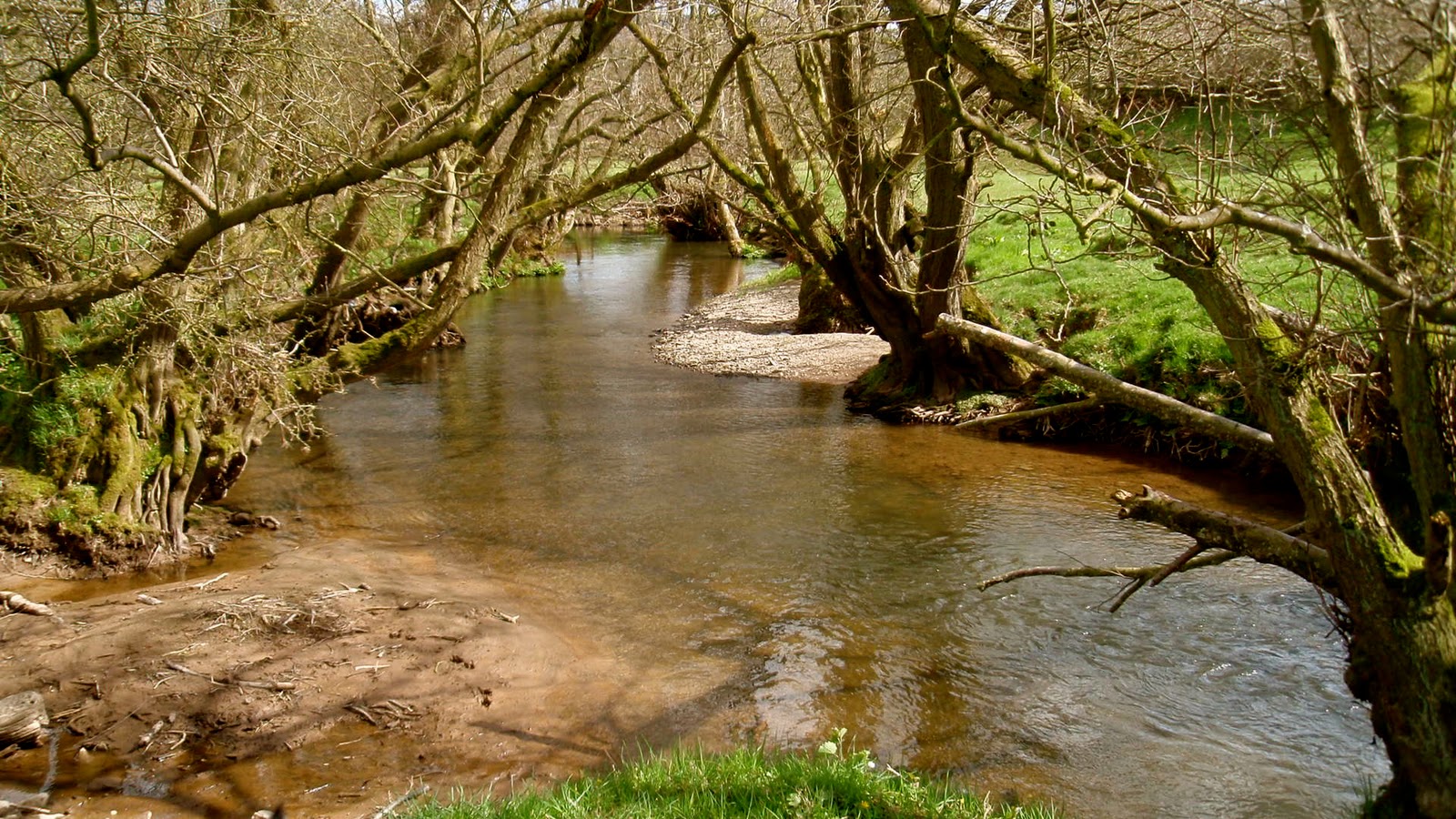
Countryside Unvarnished


Early Spring

Fallen and Broken Trees


Streams and Rivers Silted up and Blocked


Horses' Field Stables that Have seen Better Days


PS. Is there nobody who would like to be my 100th follower?
My followers patch has been stuck on 99 for ages!
Only asking.


Tuesday, 20 April 2010

BEING BORING


"May you live in interesting times"
Chinese curse


Have you noticed that life, real honest-to-goodness life,
with murders and catastrophes and fabulous inheritances,
happens almost exclusively in the newspapers?

Jean Anouilh,  The Rehearsal


B O O O O RING

(Do kids still say that, in long drawn out yawns, in reply to any suggestion by an adult that a certain activity might be of interest to them?)

Occasionally, I treat myself to a facial massage. When Helen, the beauty therapist asked me, "Have you done anything exciting since I last saw you", while trying to peel the patina of ages off my face, I was thrown off balance. I was prepared for an hour's pampering, not for a question and answer session. Besides, I prefer my hairdressers, masseuses and beauticians to be silent; there's enough going on  in my head to send me to distraction already. Helen is a sweet young woman, usually quiet; perhaps she'd been on a refresher course where the lecturer had told her that she must engage the client in conversation, to show an interest.

"So, have you done anything exciting?"

In a word, "no".  "Certainly nothing you would find exciting".

When I thought about it a bit more I came to realize how boring my life must seem to a young, busy, working wife and mother of three school age kids.

Last week we went  to see a "boring" play, Pinter's  The Caretaker, one day, and entertained a group of very elderly people to tea the next;  I also had lunch and a giggle with a friend, a real highlight. Spending the day gardening, walking the dog, shopping for and cooking dinner, doing household chores, reading the papers, watching TV, talking to a neighbour about nothing in particular, taking the dog to the vet, spending an hour on a fiendishly difficult crossword, getting the car serviced, going to the pub with Beloved,  that's the usual picture. In a good month social life picks up a bit, there might be a party or two, or a visit to a concert thrown in. But on the whole, life is spent at home, doing nothing much.

I still write letters, by hand, on paper, to friends who dislike emails and typed manuscripts. On average, I write about once every two  months to each of them;  composing an interesting letter that deals with all the news of a couple of months is getting harder all the time; on paper one can't just waffle on as one does in a blog, a quick soundbite as in an email is not suitable either. I have to think, compose proper sentences, paragraphs with meaning and real news.  At no other time am I more aware of how eventless my life has become.


Wendy Cope


the English poet,
summed it up beautifully.


Being Boring


If you ask me 'What's new?', I have nothing to say
 Except that the garden is growing.
 I had a slight cold but it's better today.
 I'm content with the way things are going.
 Yes, he is the same as he usually is,
 Still eating and sleeping and snoring.
 I get on with my work. He gets on with his.
 I know this is all very boring.

 There was drama enough in my turbulent past:
 Tears and passion-I've used up a tankful.
 No news is good news, and long may it last,
 If nothing much happens, I'm thankful.
 A happier cabbage you never did see,
 My vegetable spirits are soaring.
 If you're after excitement, steer well clear of me.
 I want to go on being boring.

 I don't go to parties. Well, what are they for,
 If you don't need to find a new lover?
 You drink and you listen and drink a bit more
 And you take the next day to recover.
 Someone to stay home with was all my desire
 And, now that I've found a safe mooring,
 I've just one ambition in life: I aspire
 To go on and on being boring.

Saturday, 17 April 2010

THE DOOR

A door is a moveable barrier used to cover an opening. Doors are widely used and found in walls or partitions of a building. A door can be opened to give access and closed to deny it.  When open, a door
admits ventilation and light, without which we cannot live.


A closed door forbids us entry, a closed door says 'stay away from me', I am hiding a secret;
an open door says 'welcome', please enter and explore.


Go and open the door.
Maybe outside there's
a tree or a wood,
a garden,
or a magic city.

Go and open the door.
Maybe a dog's rummaging.
Maybe you'll see a face,
or an eye,
or the picture
of a picture.

Go and open the door.
If there's a fog,
it will clear.

Go and open the door.
Even if there's only
The darkness ticking,
even if there's only
the hollow wind,
even
if
nothing
is there,
go and open the door.

At least
there'll be
a draught.

Miroslav Holub
1923-1998


Thursday, 15 April 2010

You Never Know Whom You Might Meet In The Pub

It was our 23rd wedding anniversary the other day. Second time round for both of us, so no, we were no giddy goats when we set out 23 years ago.

“Will they last, do you think?”  “No chance”.

Sorry, chaps, they did, this long anyway. And unless they fall out over who has first call on the Zimmer frame, gets to eat all the soft centre chocolates in the box, or has control of the TV remote, (what is it with men and the remote?), they’ll probably last for the duration.

But back to the pub.

25 years ago the Charing Cross Road in London was still full of bookshops, red double deckers, black cabs; pavements covered in litter, sleazy bars and old-fashioned pubs and the occasional ‘working girl’  straying from nearby Soho.

Theatres and the  Astoria Cinema fetched in the suburban crowds in the evening,  while tramps and young, homeless boys and girls murmured their monotonous chant “got any spare change” at them.

Centre Point stood tall and empty and opposite Centre Point was The Royal Sovereign, not exactly spit and sawdust, but dark and shabby, full of wooden, ‘mahagony type’ pub furniture, settles and benches, with small brass tables, where tiny beer puddles gathered in the dimples of the beaten tops.

The nearest Underground station was just around the corner, which made the pub a handy pit stop for a quick drink and unwind before going home after work.
Artists came here, media people (who were not called media people in those days), booksellers and assorted office workers. People just setting out for a night’s work came here too, like musicians playing in West End shows and The Royal Opera in Covent Garden.

A particular chap caught my eye on several occasions; we got talking over a pint, decided to go for a pancake in nearby Holborn, which was close to this chaps’ place of work and another tube station for me on my way home.

Reader, I married him.

Twenty five years later I thank my lucky stars for women’s lib, without which I would not have had the nerve to walk into a pub after work, talk to a strange man, go for a pancake with him, without ‘having been introduced properly’.

All you young women and girls of today, who take such freedoms for granted and make fun of the old-style feminists, think again. You owe them quite a debt of gratitude.


Tuesday, 13 April 2010

A Very Sad Garden


This is my first attempt at creating a collage. I think I'd rather go on working in the garden.

We had a gorgeous weekend, the sun shone, it was warm and the birds sang. Gardener came and we worked for seven hours, with a short intermission for a hasty lunch and frequent cups of tea provided by Beloved.

The flowers shown are Chaenomeles, white anemones, blue anemones, miniature tulips and  yellow primroses.

Gardener and I have been taking a close look at the shrubs, flowering, evergreen and ordinary deciduous ones.
There is a lot of winter damage; most of the hebes have succumbed to the frost, the leaves on the bay tree and an ancient and very large cistus have turned brown and shrivelled, certain to crumble and drop soon. Olearias, nandinas, a hydrangea or two barely hang on, one or two of the Japanese maples have suffered severe wind damage, and all phormiums have rotted away.

Abelias, caryopteris, and ceanothus show no, or very little, sign of life.

So much of the backbone of the garden has been destroyed this winter that it breaks my heart. Herbaceous plants are easy to replace, either by division, root cuttings or scrounging, a favourite way of enlarging your stock among friends and fellow gardeners.

Unless you are a gardener you probably think 'what a lot of fuss over nothing'. 'Just buy new plants'.
Most of these plants have a history; I remember where they came from; some were swapped for other plants, some were grown from tiny cuttings (one or two of which I might even have taken from famous gardens, with permission from the head gardener), for some I travelled to specialist nurseries all over the UK, some have come with me from a previous garden, been dug up and transplanted. Some were given as presents for a special occasion, their growth measuring somebody's passing years.

Of course, they can all be replaced, but it takes a long time for shrubs to grow to maturity. There is still the possibility that some shrubs might recover after serious pruning later on this Spring; sometimes new shoots and leaves will sprout as much as a year later. In the meantime, I will have large gaps in my borders, to be filled with my least favourite gap fillers, here-today-and-gone-tomorrow annuals, silly and brazenly colourful show-offs, only good for tubs and pots and window boxes normally.


Sunday, 11 April 2010

You Don't Have To Like People To Like Them


Pierre-Auguste Renoir
The Luncheon of the Boating Party
1881


No, not a mistake, I know what I said there.
Let me explain.

There were eight of us to lunch with a couple who had invited us to their house for the first time. We had met a few times before, had sat at the same table even, just never in our own homes. So the invitation did not come completely out of the blue, but we hadn’t really been expecting one either.

We arrived to find other couples we knew, the host offered wine and the conversation began in a relaxed and amiable fashion. From the beginning, we found that we shared very few of the opinions of the others most of the time. No matter what the topic was, from leisure activities, cultural preferences, religion, politics, to music, literature, films, newspapers, our tastes were quite different from the hosts’ and usually several of the other guests.

Yet it made no difference to the friendly atmosphere round the table. Although we all spoke frankly, nobody fell out with anybody else and when the opinion expressed by one or other seemed too extreme to counter, we just kept quiet.

Back home, I nearly fell off my chair when Beloved casually said “Nice people”. He meant it. I had to agree. In spite of the differences of opinion and some difficulties about the food (the hostess didn’t realize that I have a particular food intolerance), we had both thoroughly enjoyed the lunch. In fact, we and another couple stayed long after it would have been polite to leave. I am certain hat this will not have been the last time we share a meal.

What is it that allows us to get on with people, and enjoy their company, with whom we have nothing in common whereas we can fall out with others, whose opinions we share ?

Family is different. You row and shout and become very rude, you hate each other and say so, you dredge up every last insult and slight and misunderstanding, you vow never to darken each other’s doorstep again. When that is over, and the air is cleared, you band together as a family once more, until the next time.

Very well, it doesn’t happen in your family, your family is different. Lucky you.

There are close friends who do that to each other too. I have no close friends.

When we meet others socially, we have to be on our best behaviour, we are unlikely to provoke a row. Telling the other what we think of him is for children or social morons. Manners come into it, an ability to remain detached and polite, to respect the other and accept them as equals, to listen to what they have to say without interruption.

But what is it that allows us to say, quite genuinely, “Nice People”, when we have just spent a few hours in  the company of people of the kind “we don’t like”?

And it wasn’t only the wine!


Wednesday, 7 April 2010

Why Jam and Jerusalem is not for me.


Ever since the film “Calendar Girls” came out, The Women's Institute is surely known all over the English-speaking world and needs no further introduction.

Having left London and the world of paid employment for the rural delights of the Home Counties, joining the WI seemed a natural progression. I had heard that they had more or less given up handing out prizes for the prettiest, flower-filled thimble and the tastiest slice of fruitcake and have turned their attention to weightier matters.

I duly turned up at the village hall and was made very welcome.

Picture the scene: an old-fashioned, plain village hall, a row of chairs neatly lined up and facing a large table behind which stood more chairs for use by ‘the committee’, and an old upright piano along one wall. On the table were small items of a decorative nature, floral and handicraft.

The ladies sat down; I noticed that one had gone to the old piano. She lifted the lid. The top table gave a signal, everybody stood up again, the piano roared into life and the ladies sang! Sang  Jerusalem ! Lustily, loudly and with great enthusiasm. Somebody kindly handed me a song sheet, inviting me to join in.

In for a penny, in for a pound.

I was just exhorting the powers who have such treasures within their gift to

Bring me my bow of burning gold,
Bring me my arrows of desire;
Bring me my spear: o cloud unfold!
Bring me my chariot of fire,

when my necklace broke and pretty beads clattered all over the wooden floor.  The ladies either side of me abandoned their stations and scrabbled about to hunt them down, while I stood, petrified, burning with shame, clutching the few beads remaining on the broken string. The song came to an end, the ladies handed me the beads they had gathered up;  I dumped the lot in my bag. From the top table came a voice expressing regret at the unfortunate disturbance to the solemn start of the meeting. I wanted to sink through the floorboards and vanish without trace. I stayed.

Next a pair of ladies from another group were introduced who had had great success with initiating play-acting during meetings and were willing to share their success with our little band.

We were duly lined up, in pairs, and asked to perform a series of activities which included greeting each other, bowing, raising an imaginary hat, conversing and moving on to the next group, there to repeat the performance.

This was to release inhibitions and prepare us for more demanding work.

I grew desperate. I could feel myself seizing up and a rictus grin settling on my face.  One of the instructresses noticed my discomfort and asked sweetly:  “Don’t you like the theatre?”

The rest of the meeting became a blur; I know there was some kind of round dance with more bowing and scraping, during which, and long before tea and biscuits, I made my excuses and fled.

When I got home I was almost in shock, it took a large glass of wine to restore me to equanimity. Utterly ridiculous, I know.

I never went back. 


Monday, 5 April 2010

The Scraper's Diary, Tuesday, April 8th, 1947

The Scraper, a young conscript and musician, is on a six week tour of the British Army of the Rhine; he and the band are travelling from camp to camp, playing in make-shift concert halls, officers' and OR's messes and churches. But mostly they are bored, making use of the black market whenever they can, playing cards and drinking. The Scraper keeps a diary throughout.


The tour is almost over.

Rendsburg

A most interesting day, apart from - or in spite of - the monologue from Gunner Say, about his amatory experiences of the last few days, and the after-effects thereof.

We loaded the lorries at eight thirty this morning, drove to the barracks for breakfast and then on to Rendsburg. We are staying in the erstwhile ENSA hostel here, the third hotel in three places. Sheets, tablecloths, hot water, waitresses . . . . .

Mike and I went out to see the sights this afternoon. We discovered a fair, almost hidden by mobs of children. I tried my hand, unsuccessfully, at hoopla and Aunt Sally. Mike won a shapeless, purposeless piece of metal at the Aunt Sally. Most of the stalls were merely pigs in pokes. You bought little screws of paper at 20 Pfennigs each and if they bore a number you won a suitably insignificant prize. Most of the prizes were cheap, useless things, rosettes, cheap dolls and penknives and the like. One prize, rated pretty highly, was a teat for a baby's bottle.

There were none of the English side shows like roll-'em-downs, rubber-ball-rollings and lotteries; nothing but a few tawdry roundabouts. I felt a general air of "I must enjoy myself, even if it is all hollow."

Having seen all we wanted of the fair, we went slowly on to the Naafi and sat in the lounge reading. Soon after, a funeral cortège passed the window.

First came a ragged procession of men in greys and browns, all wearing bowlers or caps. Gradually the colours darkened and then came four men in black frock coats and top hats; then came the wreaths, reverently carried by sad-looking elders; then came the hearse, draped in black and drawn by two black horses in black-plumed harnesses. Directly behind the hearse was an old lady, leaning on the arm of a young man, weeping proudly and profusely. Behind them came three young women with wet eyes and handkerchiefs. A black robed priest followed wearing what seemed to me to be a cardinal's black biretta.

A ragged assortment of men and women followed, in dark clothes or with black armbands and finally, there was a closed carriage, in which four black-clad old women were talking animatedly.

The whole procession was in unrelieved black, with a few greys and browns sprinkled through here and there, except for the bright red shorts worn by six men who marched, three on each side, by the side of the hearse, heads bowed. There was no sound except for the shuffling of feet and the ragged rattle of the horses' hooves.

They passed beyond our field of vision and we sat down gain. Len started playing some light song. I  picked up my book again.

"Quaint, these continental customs", said the W.V.S. lady, and went back to her book-sorting.

Saturday, 3 April 2010

EASTER


Easter eggs and the Easter Bunny

Since the time of the ancient Teutonic world the egg has been regarded as a bringer of luck and symbol of fertility, a joyful gift to celebrate the return of spring.

Although egg painting was known in pre-Christian Greece the custom did not reach Northern Europe until the 17th Century when the Turks conquered Byzantium, causing many of the inhabitants to flee northwards, taking their traditions with them, including the custom of painting eggs.

Written records show that the Easter Bunny as egg bringer first appeared on German soil in 1682, in the company of cockerels, foxes and donkeys, who were all deemed "responsible" for the delivery of eggs. It seems most likely that the rabbit won through against the competition because of its high symbolism. Like the egg, the ancient Greeks, Romans and Teutons revered the rabbit as a symbol of fertility.

All the Easter Sundays of my childhood were sunny, how could it have been otherwise. In the predominantly catholic area where I grew up children were told that the Church bells, which fell silent on "Green Thursday" (Maundy Thursday) and did not sound again until Easter Sunday, had flown to Rome, to be blessed by the Pope. So, on Easter Sunday morning, we were woken by the joyous, noisy clamour of the freshly returned bells of the village Church and all the other Churches in villages all around ringing out over the wide, flat, marshy land.

Children rushed outdoors to hunt for the Easter eggs which their parents had painted and hidden in small clusters all over the garden. There were no chocolate eggs until much later but I do remember, that we were given sweets, such as liquorice sticks and boiled, flavoured lumps of sugar when food  became available off the rations and the black markets had ceased to exist.

The eggs were eaten for breakfast. Once the first novelty and excitement of the hunt had passed and the basket of prettily patterned, painted eggs on the table had been admired, I soon grew tired of eating them. They were, of course, cold and hard-boiled, I could never manage more than one; thinking back now, it seems to me that they were dished up, in some form or other, for days afterwards. Eggs were by no means plentiful, not even in the country; being part of the rations, they were a precious source of nourishment, highly appreciated.


Thursday, 1 April 2010

APRIL MISCELLANY


All Fool's Day 

On this ancient feast of unknown origin, the most time-honoured method of making 'April Fools' is to send them on pointless errands; and articles much in request by victims include pigeons' milk, striped paint, copies of the 'Life of Eve's Mother', hen's teeth, and a 'long stand',  Beloved remembers a boy coming into the grocer's shop asking for a tin of elbow grease.

In Germany, apprentices and children were sent to fetch tools made from glass, such as files, pestle and mortar, scissors, or they were asked to go and buy rubber hammers, or lead weights for spirit levels. I have been sent to find an egg sieve, sausage seeds and checkered wool The real cruelty was that the shopkeeper would say that he'd just run out but the next workshop or the shop down the road would probably still have some, and the poor sap would thus spend hours on his fool's errand, before he finally twigged or until it had got to midday, when the joke would end, whichever was the later.

 o-o-o-o-o


In spite of this morning's snow, which luckily didn't last,
 and the rain following,
 I found both these in the hedgerows this afternoon:
the native primroses and pretty little jonquils.


Valley's End is surrounded by fields with
bleating lambs.


 A few facts about Sheep from a local Farmer

A ram or tup is an uncastrated male.
A wether is a castrated male.
A theave is a female lamb.
A yearling is a one year old sheep.

Sheep only have teeth in the lower jaw at the front, but have molars in the top
and bottom at the back.

A sheep's age is determined by its teeth:

Two broad teeth = one year old
Four broad teeth = two year old
Six broad teeth = three year old
Eight broad teeth = four years and over.


Ewes can only rear two lambs as they only have two teats.

Sheep have only one aim in life:
and that is to die as soon as possible.

o-o-o-o-o-o